Compare latte and cappuccino through milk amount and texture
Latte and cappuccino both combine espresso and milk, but the balance and texture can differ. A picture of foam or latte art is not enough to identify the recipe. Ask about the actual serving, then describe whether you want more milk, a different texture or a smaller drink.
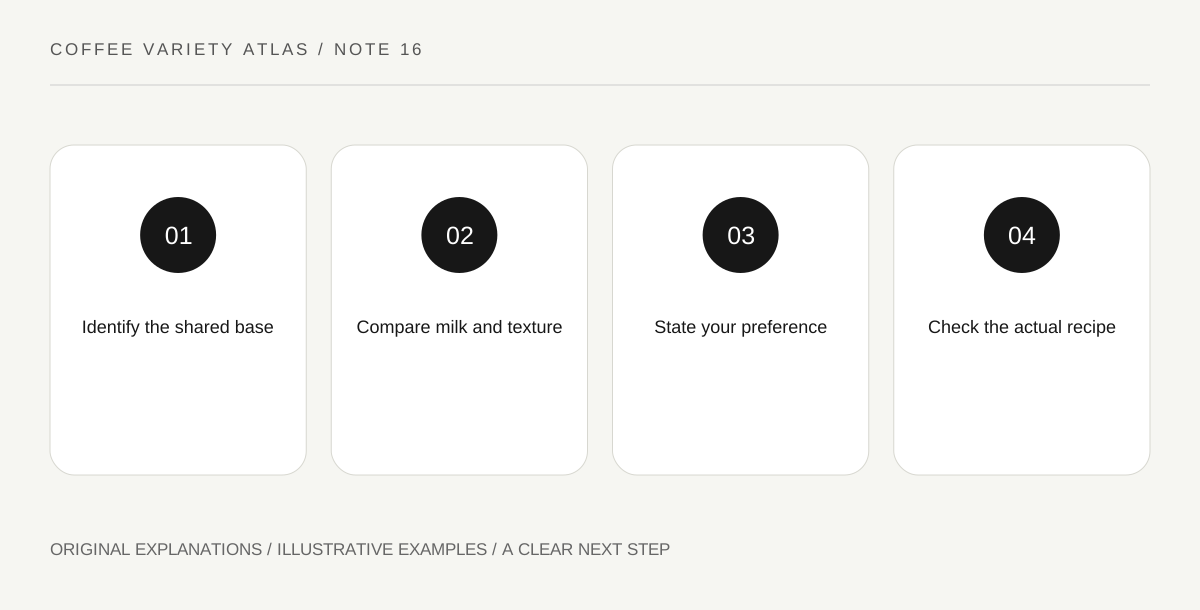
Original explanatory diagram. Read the full method and limitations below.
Start with the shared components
Both names commonly refer to espresso-based drinks with milk. The café’s recipe determines the espresso component, total milk and foam treatment. A branded operator’s explanation is a useful example, not a universal law that every independent café or region must follow.
Draw a shared espresso base and two milk branches. Leave exact quantities blank until the café provides them. This keeps the comparison about construction rather than a memorized ratio that may not describe the drink available in front of you.
Distinguish amount from foam texture
A latte is often presented as more milk-forward, while a cappuccino commonly emphasizes a different balance and foam structure. The precise result varies by operator. Ask how the café distinguishes them rather than judge only by the height of a visible foam cap.
Foam is not simply extra flavourless space, and the appearance changes as a drink is handled. A small surface photograph may not reveal the underlying amount of liquid milk or espresso. Use the menu description and a clear question to understand what is being served.
Describe the preference you actually have
If you want a less milk-dominant drink, say that rather than assume every cappuccino will have the size and balance you expect. If you enjoy a smooth integrated texture, describe that too. A preference can be communicated without declaring another preparation incorrect or unsophisticated.
Milk alternatives and additions change the actual product. Check the café’s current ingredients and preparation information when relevant, especially for dietary requirements. A familiar drink name does not guarantee a particular milk, absence of sweetener or suitability for every person.
Compare servings at a useful level
A small cappuccino and a large latte differ in more than foam. If you want to understand the names, compare the café’s stated recipes and serving sizes rather than attribute every sensory difference to one feature. A fair observation can acknowledge several changing components.
For an exercise, read two fictional menu descriptions and identify the shared base, milk amount description and texture description. Then write an order in plain language. The aim is a drink that fits your preference, not winning an argument over a universal ratio or treating latte art as evidence of a particular recipe.
For a comparison exercise, draw two cups and label their advertised size, milk type and foam description before adding any impressions. If one drink arrives in a larger vessel, that difference belongs in the record rather than being attributed entirely to its name.
Illustrative milk-balance request
A customer finds a café’s latte more milk-forward than they want. They ask how its cappuccino differs. The barista explains the fictional café’s smaller serving and foam approach. The customer chooses that version and checks the available milk. Their decision is based on the actual recipe rather than assuming every cappuccino everywhere has identical thirds.
Practical checks
Optional checkboxes save only in this browser.
Questions that come up
Is a cappuccino always equal thirds?
Do not assume one ratio describes every café practice. Ask how the operator prepares it and compare the actual serving. A simplified diagram can orient you but should not override product information.
Does latte art prove the drink is a latte?
No. Surface art can appear on several espresso-and-milk drinks. Drink identity depends on construction and the café’s recipe, not the drawing alone.
References and scope
These sources support the factual background. Examples and exercises are original illustrative teaching material. References do not imply endorsement.
- Starbucks: Espresso explained — A café operator’s examples of espresso, Americano and espresso-and-milk drink construction; recipes are operator-specific.
- Starbucks at Home: Latte macchiato — A primary example of latte macchiato as a milk-forward layered preparation.
- World Coffee Research: Sensory lexicon — Sensory attributes and shared reference vocabulary; tasting language is not an ingredients list.