Clarify which macchiato a menu means before ordering
Macchiato appears in several drink names that can describe very different servings. An espresso macchiato and a latte macchiato do not give the same balance of coffee and milk, while branded flavoured versions add another layer. Read the complete name and ask about construction instead of ordering from one familiar word.
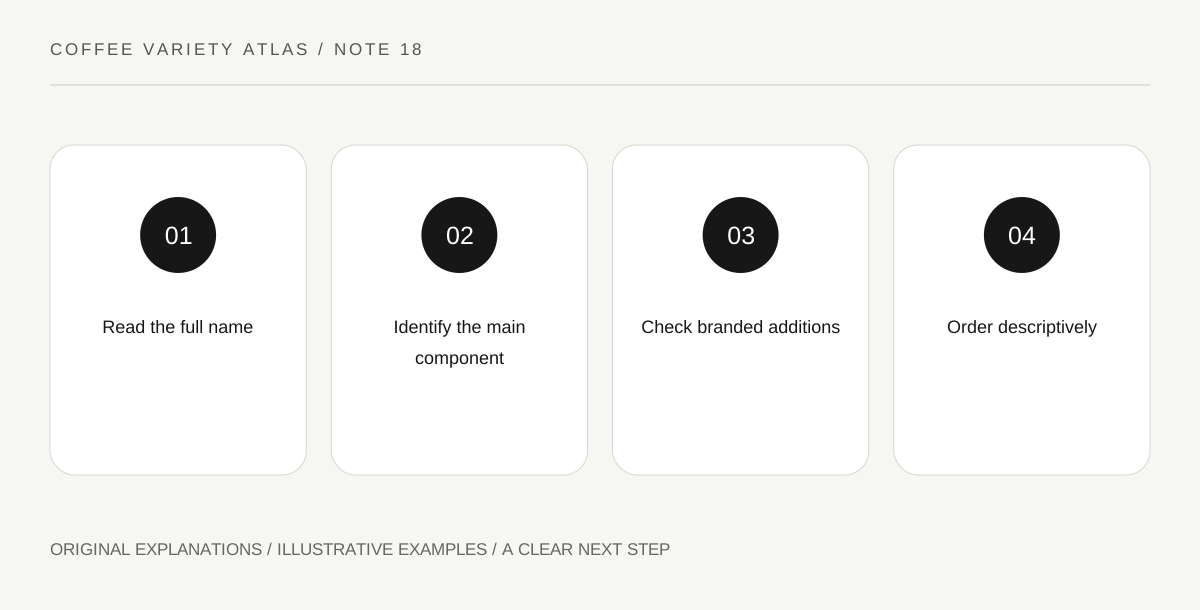
Original explanatory diagram. Read the full method and limitations below.
Read the noun being described
An espresso macchiato commonly refers to espresso with a small milk addition. Latte macchiato refers to a milk-forward preparation marked with espresso. The distinction in the full name matters more than the shared word macchiato. A menu that shortens the name may need clarification.
Use a simple two-branch diagram: espresso as the main component on one side, milk as the main component on the other. This is an orientation, not a universal measured recipe. The café’s actual method determines the serving and any additional ingredients.
Notice branded and flavoured versions
A menu may use macchiato in a named beverage with syrup, sauce, a particular milk or a serving sequence. Those details belong to that product. Do not assume the word alone means a tiny unsweetened espresso or, in the opposite direction, a large sweet layered drink.
Check the current description and ingredient information. A brand’s version can be accurately described without being treated as the definition of every café’s drink. The useful question is what this menu item contains and how it is served, rather than which interpretation deserves to own the word.
Distinguish layering from total composition
A visibly layered drink can change as it is stirred or sipped, but the layers do not by themselves tell you the total espresso or milk. A photograph may emphasize the sequence while leaving the quantities unclear. Ask about the components if they matter.
Decide whether you want the layered experience or a mixed drink. You can state that preference in ordinary language. A request for no syrup or a smaller milk amount may be possible, but the café can explain whether that produces another named item or an available customization.
Use a descriptive order in an unfamiliar café
If you want a small espresso with a little milk, say that as well as the name. If you want a milk-forward layered drink, describe it. This reduces the chance of receiving a product based on an assumption imported from another menu.
For an exercise, compare three fictional descriptions: espresso with a small milk mark, milk with espresso added and a flavoured branded macchiato. List the likely questions before ordering. Keep exact ingredients and amounts tied to each fictional description, and do not turn the exercise into a claim about every café or a recommendation to consume a particular drink.
Illustrative name clarification
A customer used to a large flavoured macchiato sees macchiato on a small café menu. They ask whether it means espresso with a little milk or a larger milk-based drink. The café explains the small espresso version. The customer then chooses another item that matches their preference, avoiding disappointment without declaring either naming practice universally wrong.
Practical checks
Optional checkboxes save only in this browser.
Questions that come up
Does macchiato always contain syrup?
No. Some named branded versions do, while other macchiato preparations do not. Read the actual product description and ingredients instead of inferring sweetness from the word alone.
Can I identify the drink from its layers?
Layers provide one clue about serving sequence, but not a complete recipe. Ask about the espresso, milk and any additions when the menu leaves those details unclear.
References and scope
These sources support the factual background. Examples and exercises are original illustrative teaching material. References do not imply endorsement.
- Starbucks: Espresso explained — A café operator’s examples of espresso, Americano and espresso-and-milk drink construction; recipes are operator-specific.
- Starbucks at Home: Latte macchiato — A primary example of latte macchiato as a milk-forward layered preparation.
- Starbucks: Iced Americano, cold brew and iced coffee — Distinguishing drink identity by brewing method rather than serving temperature alone.