Plant identities3 min read
A coffee bag can name a species, a plant variety and a place without those terms competing. They answer different questions. Learn to sort the information before using any one word as a promise of quality or flavour, and notice when a label gives only a broad level of identity.
Read the guide ↗
Plant identities3 min read
Typica and Bourbon are important names in Arabica coffee history and genetics. They can appear as named varieties or as references to broader related groups. Understand what a label is claiming, then keep that identity separate from country, cherry colour and the sensory description of a particular lot.
Read the guide ↗
Plant identities3 min read
Caturra and Catuai look similar on a label but identify different plant histories. Learn their documented relationship and practise reading the exact name. The goal is accurate recognition, not a prediction that one will always taste a particular way or be better than the other.
Read the guide ↗
Plant identities3 min read
Gesha and Geisha are familiar coffee names, but spelling and reputation do not establish a lot’s exact plant material or origin. Use the documented variety context to ask focused questions. Keep a name, a farm’s traceability and the experience of one cup separate from assumptions about rarity or guaranteed quality.
Read the guide ↗
Plant identities3 min read
Numbers in coffee names can look like ratings or roast codes. SL28 and SL34 identify distinct named varieties instead. Learn to keep those names intact, separate them from a lot’s sensory score or grading language and avoid assuming that a larger number means a better coffee.
Read the guide ↗
Plant identities3 min read
A broad plant-population description does not give the same precision as a named selection. Terms such as landrace or heirloom may appear when a coffee’s identity is described generally. Learn what a documented landrace definition establishes and ask what the supplier means instead of inventing a single variety behind a broad label.
Read the guide ↗
Plant identities3 min read
A hybrid name describes plant parentage and generation, not a verdict on whether a coffee is natural, authentic or enjoyable. Learn the basic F1 meaning through a documented example. Then distinguish agricultural aims from sensory claims about a particular processed and roasted lot.
Read the guide ↗
Processing names3 min read
Washed describes a post-harvest process, not coffee that has been rinsed after roasting. Follow the fruit layers to understand the term, then read a producer’s more detailed account. The name can orient your expectations, but it does not guarantee one level of acidity, quality or cleanliness in every cup.
Read the guide ↗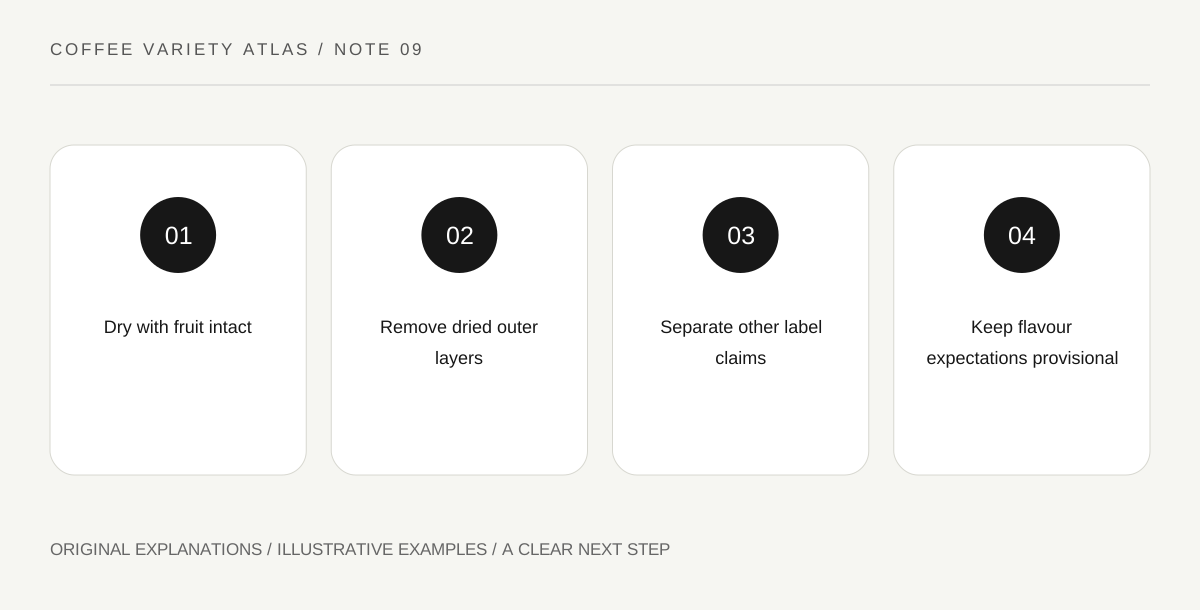
Processing names3 min read
Natural is a processing term in coffee, not a promise that other methods are unnatural. In a broad natural process, the fruit remains around the seeds during drying before later removal. Learn that sequence and separate it from organic certification, added flavours and assumptions about how every natural coffee should taste.
Read the guide ↗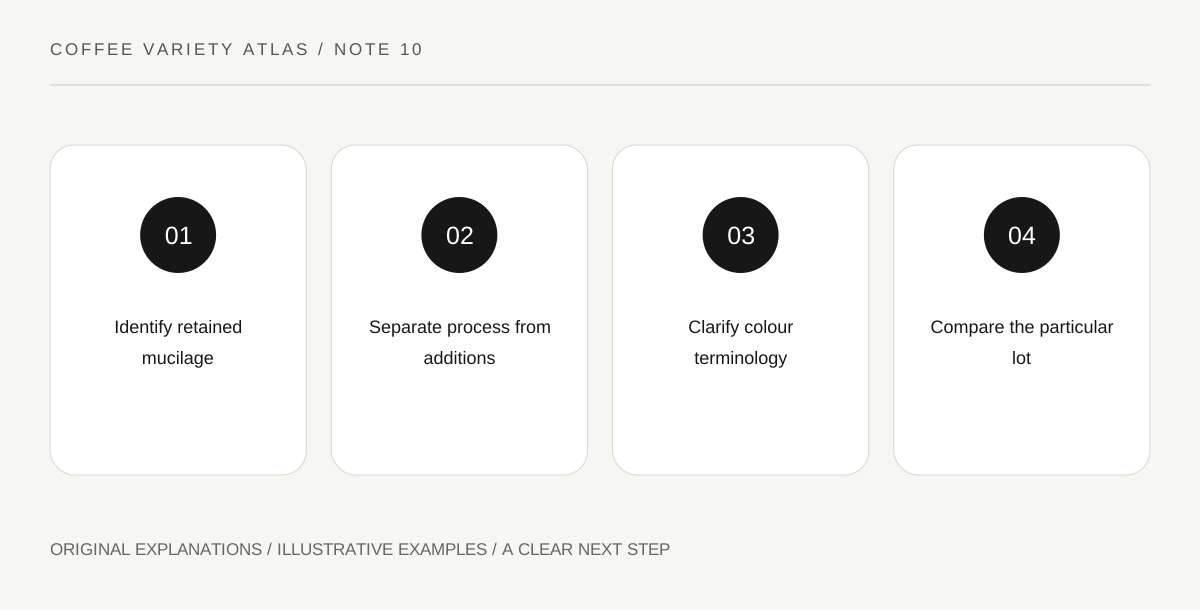
Processing names3 min read
Honey process takes its name from coffee’s sticky fruit material rather than a necessary addition of bee-produced honey. Learn which layer remains during drying and why labels can vary. Then separate a broad process description from a producer’s own colour categories and from a product’s actual ingredients.
Read the guide ↗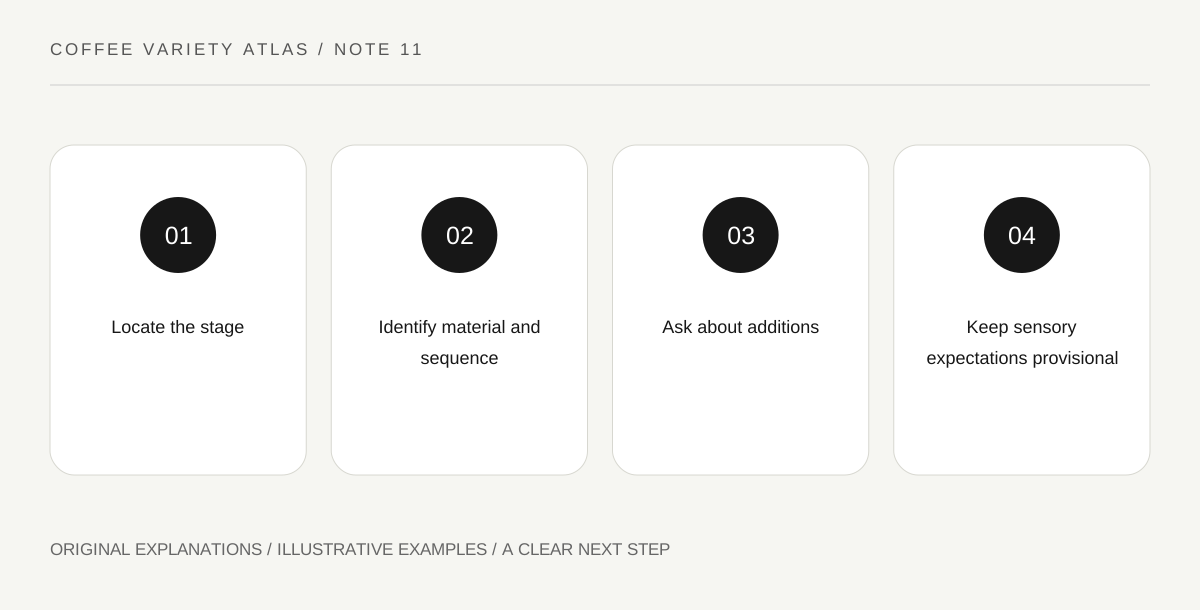
Processing names3 min read
Anaerobic describes limited or absent oxygen during a fermentation stage; it does not tell you the whole story of a coffee. Ask what material entered the stage, what happened afterward and whether anything was added. Keep the production description distinct from a guaranteed flavour or an assumption about ingredients.
Read the guide ↗
Reading a label3 min read
Decaf tells you that caffeine has been reduced through a process; it does not identify the coffee’s species, variety or origin. Learn to read the remaining label fields and distinguish a processor’s named method from a universal claim about every decaffeinated coffee. The cup still has a production history beyond caffeine removal.
Read the guide ↗
Reading a label3 min read
Single origin and blend are useful descriptions, but they do not form a simple quality ranking. An origin can be a country, region or farm, while a blend can be deliberately composed for a particular result. Read the scale and purpose before deciding what either term tells you about the coffee.
Read the guide ↗
Reading a label3 min read
A roast description tells you about a transformation after the coffee was grown and processed. It does not identify the plant or prove where the coffee came from. Learn to distinguish broad roast categories, branded names and intended preparation, then use them as context rather than a universal flavour or caffeine scale.
Read the guide ↗
Café drinks3 min read
Espresso and Americano can begin with the same espresso preparation but become different drinks when water is added. Learn the construction rather than judge by cup size or colour. Café recipes vary, so use the name as a starting point and ask about the actual serving when a detail matters.
Read the guide ↗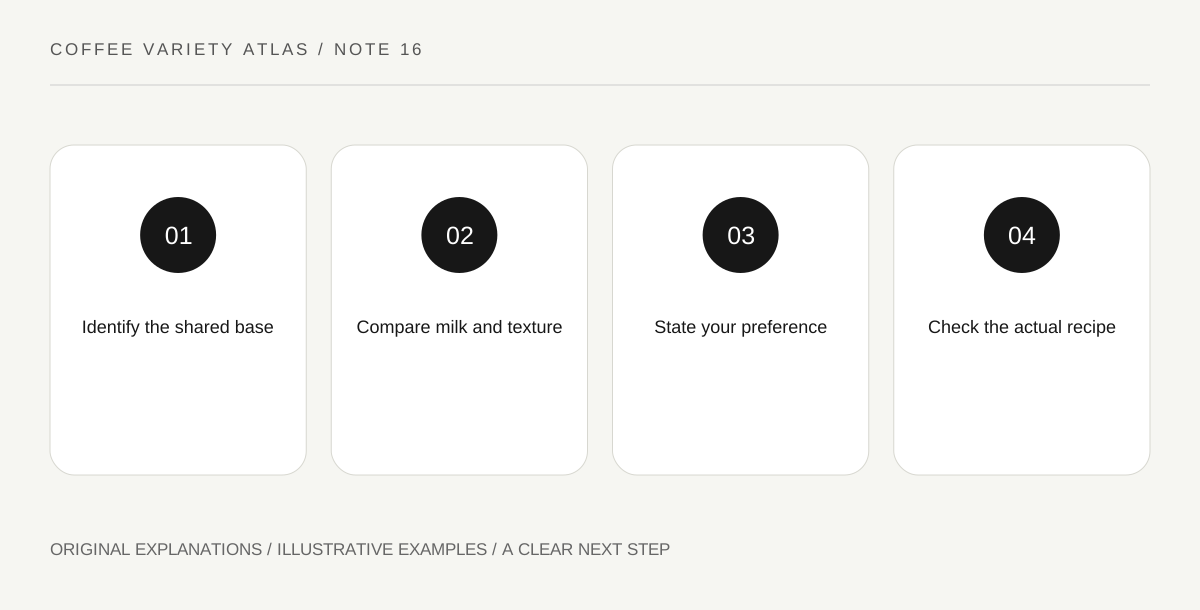
Café drinks3 min read
Latte and cappuccino both combine espresso and milk, but the balance and texture can differ. A picture of foam or latte art is not enough to identify the recipe. Ask about the actual serving, then describe whether you want more milk, a different texture or a smaller drink.
Read the guide ↗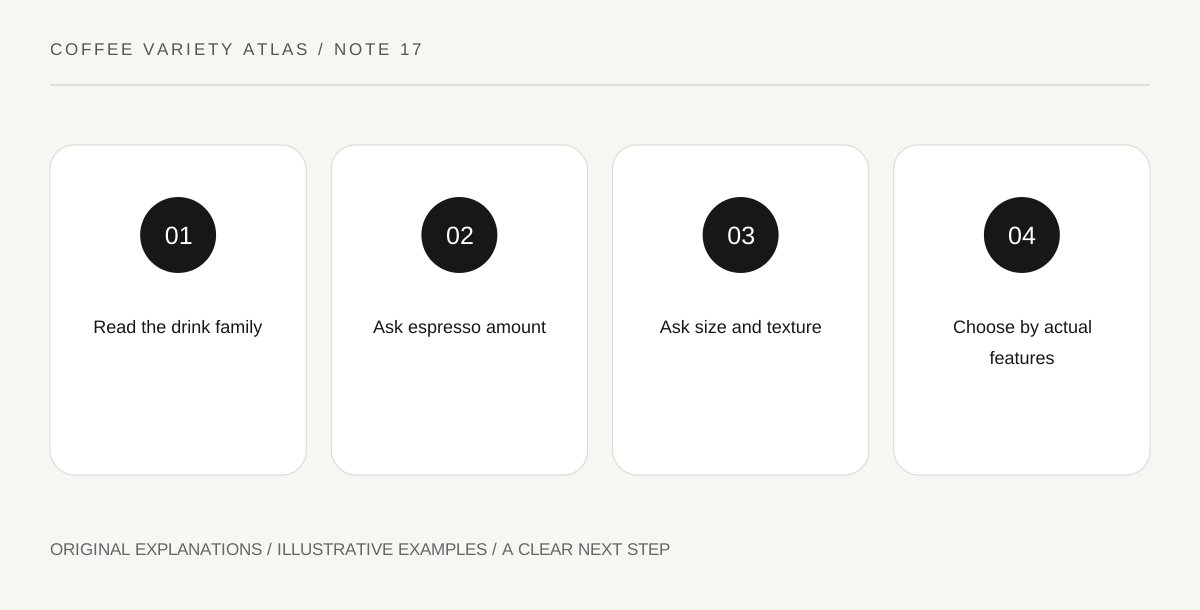
Café drinks3 min read
Flat white and cortado often signal a smaller espresso-and-milk experience than a large latte, but names and serving practices vary. Learn to ask about espresso amount, total size and milk texture. Those details are more useful than assuming one universal ratio or treating either name as a guarantee of intensity.
Read the guide ↗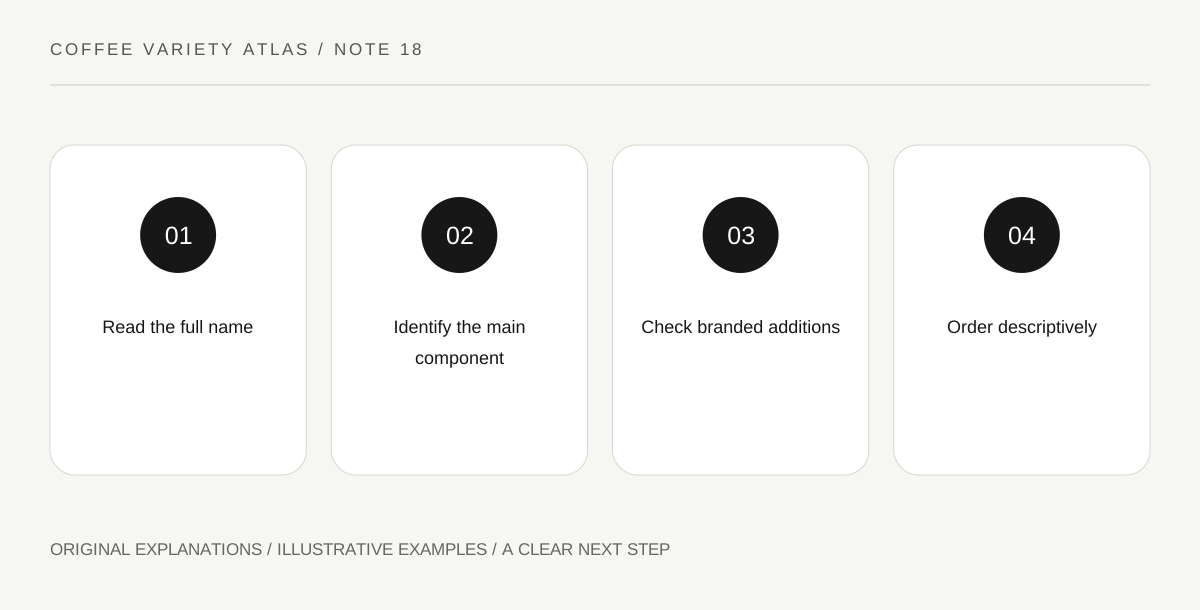
Café drinks3 min read
Macchiato appears in several drink names that can describe very different servings. An espresso macchiato and a latte macchiato do not give the same balance of coffee and milk, while branded flavoured versions add another layer. Read the complete name and ask about construction instead of ordering from one familiar word.
Read the guide ↗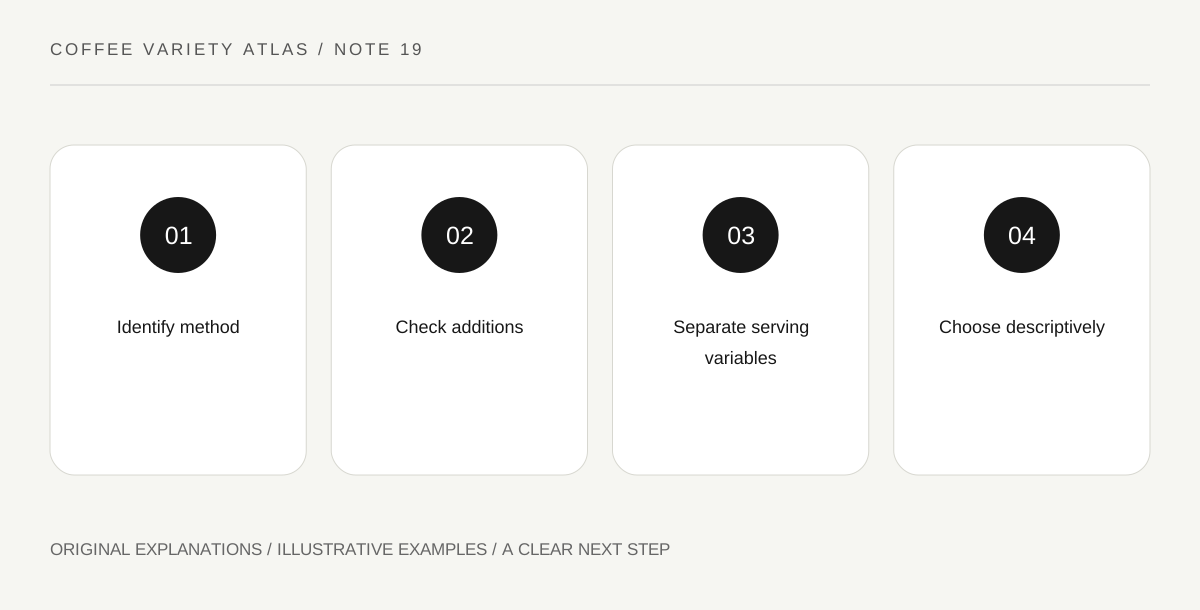
Café drinks3 min read
Three black cold drinks can look similar while beginning with different preparation methods. Serving temperature alone does not establish identity. Learn the main construction of iced coffee, cold brew and iced Americano, then check additions and the actual serving rather than infer sweetness, caffeine or flavour from the name.
Read the guide ↗
Reading a label3 min read
Chocolate, citrus or floral words on a coffee bag may describe sensory resemblance rather than added ingredients. Learn to distinguish a tasting vocabulary from composition and from your own experience. A useful note can be broad, tentative and personal without pretending you identified every descriptor printed on the package.
Read the guide ↗